
Parenting after fertility challenges or a difficult journey.
Becoming a parent after fertility treatment or loss can bring great joy alongside worry and mixed emotions. Journey Of Parenting shares encouragement and resources for families, however they were formed.
- Inclusive of every family
- Every feeling is valid
- Stories to share together


However your family began, it belongs here.
Journey Of Parenting focuses on pregnancy and family life after fertility challenges. Please take whatever is helpful to you.
-
Pregnancy after treatment or loss
Pregnancy after treatment or loss
Many people feel hopeful and anxious at the same time. Your midwife or clinic can answer questions about your own pregnancy.
Trusted organisations -
The early days
The early days
After a long wait, tiredness, worry or low mood can sometimes come alongside the joy. These feelings are common, and help is available.
Trusted organisations -
Talking with children
Talking with children
Whether your family was formed through IVF, donor conception, surrogacy or adoption, age-appropriate words and pictures can help children understand their story.
Our storybooks -
The wider family
Grandparents, family and friends
The people around a new family have often shared the journey. Thoughtful, practical support can mean a great deal.
Helpful reading
Colouring storybooks, published by Journey Of.
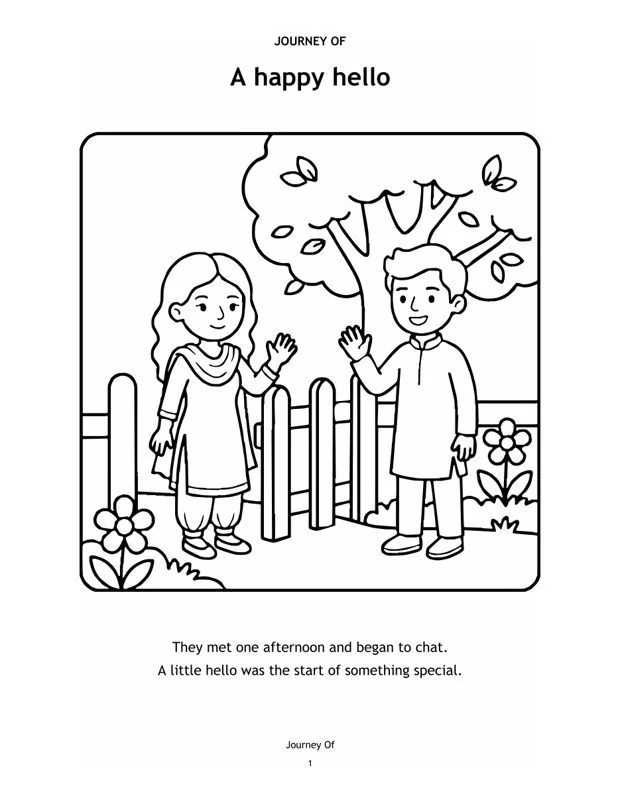
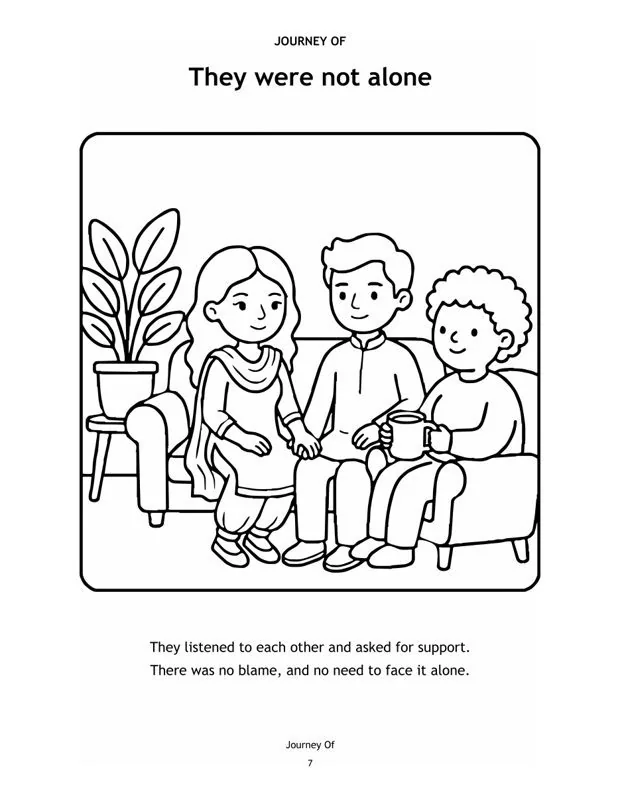
Stories for families to colour, read and talk about together. The people are left uncoloured so that every family can colour them their own way.
 Created and published by Journey Of
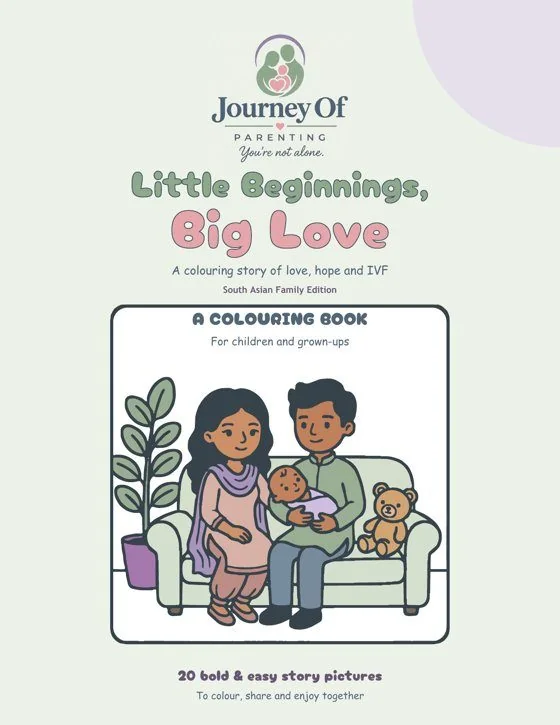
Little Beginnings, Big Love
Coming soon20 bold story pictures following one couple through fertility care and IVF to welcoming their much-loved baby, in several family editions.
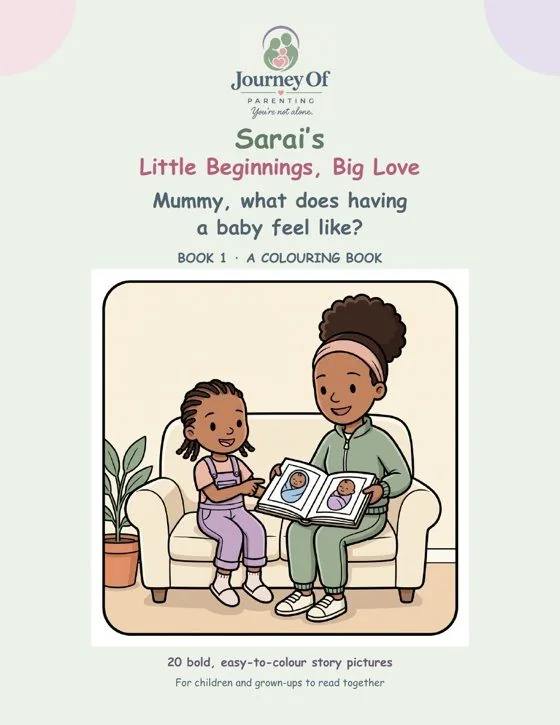
Sarai’s Little Beginnings, Big Love
Coming soonA gentle series in which six-year-old Sarai asks her mum the big questions, starting with “Mummy, what does having a baby feel like?”
Paperback, 8.5 × 11 in. Coming soon.
Guides for family life.
Gentle, plain-English guides for parents and the people around them, with links to organisations that can help.
Telling your child how they came to be
Simple, honest words for different ages, for families formed through IVF, donors or surrogacy.
Every family has its own beginning. Sharing that story with your child, in a way that suits their age, can help them feel secure and proud of who they are. There is no single right way to do it, and you can go at your own pace.
Gentle ways to begin
- Start early and simply. Many families find it helps to share the story while children are young, so it is something they have always known.
- Use stories and pictures. Books, drawings and photos can make it easier to talk. Our colouring storybooks were made with this in mind.
- Keep it honest and warm. Use simple, true words. You can add more detail as your child grows.
- Follow their lead. Children may ask the same questions many times. Each conversation is a chance to listen.
- You don’t need every answer. “That’s a good question. Let’s think about it together” is a lovely response.
- Look after your own feelings. These conversations can bring back memories. Take your time, and ask for support if you need it.
As your child grows
- Younger children. Short, simple explanations, with plenty of reassurance that they are loved and wanted.
- Primary school age. More detail if they ask, and help with what to say if they would like to tell friends.
- Teenagers. Space for bigger questions, and respect for how they feel about their story.
- Their story to share. As they grow, let them decide who they tell and how much.
- Wider family. Agree together what family and friends know, so your child hears the same loving story from everyone.
However your family began
Whether your child was born through IVF, with the help of a donor or surrogate, or joined your family in another way, specialist organisations can help you find the right words.
Talking it through first
A counsellor can help you plan what to say and when. Licensed fertility clinics can also tell you about counselling.
Useful links
- HFEA: Talk to your child about their originsGuidance on when and how to start
- Donor Conception NetworkWorkshops, books and peer support for families
- BICAFind an accredited fertility counsellor
- Coram Family LivesAdvice and support for all aspects of family life
Looking for a gentle way to start? See our colouring storybooks.
If you are struggling to cope, you can call Samaritans free at any time on 116 123. For health worries, contact your GP or NHS 111. In an emergency, call 999.
This information is general and is not medical advice. Please speak to your GP or clinic about your own circumstances.
Pregnancy after IVF or loss
Looking after your wellbeing, and questions you may wish to ask your midwife.
Being pregnant after fertility treatment or a loss can bring hope and joy alongside worry. Many people find it hard to relax, or to feel excited at first. Whatever you feel is understandable.
Looking after your wellbeing
- Take one day at a time. Small milestones can feel more manageable than looking far ahead.
- Share your history with your midwife. It helps them support you. You only need to share what you are comfortable with.
- Ask for reassurance. If you are feeling anxious, let your midwife know. They can talk through the support available.
- Choose who to tell, and when. There is no right time to share your news.
- Make room for mixed feelings. Feeling happy and worried at once, or thinking about a previous pregnancy, is very common.
- Lean on support. Partners, friends, counsellors and peer groups can all help.
Questions you may wish to ask your midwife
- Will my history affect my care, and who will look after me?
- Can I have extra reassurance or appointments if I feel anxious?
- Who should I contact between appointments if I have a worry?
- Is there extra support locally for people who are pregnant after treatment or a loss?
- What emotional and mental health support is available during pregnancy and after birth?
- How can my partner or birth partner be involved?
If something doesn’t feel right
If you are worried about your baby or your own health, contact your midwife or maternity unit straight away, day or night. You do not need to wait for your next appointment.
Your feelings after birth
Joy, tiredness and worry can all come after your baby arrives, especially after a long road. If low mood or anxiety stays, talk to your midwife, health visitor or GP.
Useful links
- Tommy’s: Help and supportPregnancy information and a helpline run by midwives
- The Miscarriage Association: Pregnancy after lossInformation and support for a new pregnancy
- Sands: Pregnancy after lossSupport for anyone pregnant after a loss
- PANDAS FoundationSupport with parents’ mental health in pregnancy and after birth
- NHS: Mental health and pregnancyLooking after your mental health while pregnant
- BICAFind an accredited fertility counsellor
If you are struggling to cope, you can call Samaritans free at any time on 116 123. For health worries, contact your GP or NHS 111. In an emergency, call 999.
This information is general and is not medical advice. Please speak to your GP or clinic about your own circumstances.
For grandparents
Practical ways to support a new family after a long road to parenthood.
Grandparents and close family often share the hopes and worries of the road to parenthood. When a pregnancy begins or a baby arrives, you may feel great joy alongside memories of harder times. Your support can make a real difference.
Ways to offer support
- Follow their lead. Let the new parents decide how much they want to talk about their journey.
- Offer practical help. Meals, shopping, lifts or a little time to rest can mean a lot. Ask before you plan anything.
- Listen without judgement. You don’t need the perfect words. Being there is often enough.
- Respect their choices. Including how they share news and how they tell their child’s story.
- Choose words with care. Phrases such as “at least” or “it was meant to be” can hurt, even when kindly meant.
- Keep their story private. Check with them before sharing details with others.
Looking after yourself
- Your feelings matter too. You may have your own worries, or memories of difficult times.
- Talk to someone you trust. A friend, partner or counsellor can help.
- Grief can affect grandparents too. If the journey included a loss, organisations such as Sands offer support to the wider family.
- There is no single right way. Every family is different, and so is every grandparent.
Sharing the joy
It is okay to celebrate. Many families welcome love and excitement from those around them. If you are unsure, ask what would feel right.
Helping with your grandchild’s story
Your grandchild may ask you how they came to be. Agree with the parents what to say, so they hear the same loving story from everyone.
Useful links
- Coram Family Lives: GrandparentsAdvice for grandparents and a family helpline
- Home-Start UKVolunteer support for families with young children
- Sands: How we offer supportSupport for parents and the wider family after a loss
- Donor Conception NetworkSupport for donor-conceived families and relatives
- NHS: Every Mind MattersPractical tips for looking after your mental health
If you are struggling to cope, you can call Samaritans free at any time on 116 123. For health worries, contact your GP or NHS 111. In an emergency, call 999.
This information is general and is not medical advice. Please speak to your GP or clinic about your own circumstances.


Community
Every family has its own story.
Follow Journey Of for updates, stories and encouragement.
Follow Journey OfOrganisations who can help.
These UK organisations offer information and support for pregnancy and family life.
- Tommy’sPregnancy information, including pregnancy after loss
- Donor Conception NetworkSupport for donor-conceived families, including talking with children
- PANDAS FoundationSupport with parents’ mental health in pregnancy and after birth
- Home-Start UKVolunteer support for families with young children
- If you are worried about your health or your baby’s, contact your midwife, health visitor, GP or NHS 111. In an emergency, call 999.
Trying again, or affected by loss? Visit Journey Of Infertility
We’d be glad to hear from you.
If you would like to share your experience or ask a question about Journey Of, please send us a message.
Photos on this page from Unsplash by Lawrence Crayton, Vitaly Gariev and National Cancer Institute.